Conficker Continues

The BBC has an article on Conficker, the virus that everyone seemed to think passed us by on April 1st.

The Conficker worm has started to update infected machines with a mystery package of data.

Computer security firms watching the malicious program noticed that it sprang into life late on 8 April.

The activity on its update system delivered encrypted software to compromised machines. It is not yet clear what the payload contains.

The Conficker virus variants are thought to be present on millions of PCs around the world.

Spam connection

The updating activity has begun about a week later than expected. Analysis of the “C” variant of Conficker (aka Downadup) revealed that its updating mechanism was due to go live on 1 April.

The belated updates were spotted by researchers for Trend Micro following the arrival of a new file in one of the directories in so-called “honeypot” machines deliberately seeded with Conficker C.

Analysis showed that the file had arrived via the peer-to-peer file transfer system that infected machines use to communicate.

In a bid to avoid alerting people to its activity, the update is slowly being trickled across the population of machines harbouring the C variant. Exact figures for the number of Conficker-infected machines are hard to determine, but the minimum is widely believed to be three million.

“The Conficker/Downad P2P communications is now running in full swing,” wrote Ivan Macalintal from Trend Research on the company’s security blog.

Once it arrives on a machine, the package of data randomly checks one of five different websites – MySpace, MSN, eBay, CNN and AOL – to ensure its host still has net access and to confirm the current time and date.

Following this check the data package removes all traces of its installation.

The strong encryption on the payload has, so far, prevented detailed analysis of what it actually does. However, security experts speculate that it is a “rootkit” that will bury itself deep in Windows in order to steal saleable data such as bank website login details.

Security researchers are continuing to analyse the payload to get a better idea of what it is intended to do.

Symantec said it too had noticed the increased activity of Conficker and its analysis suggested a link with another well-known virus called Waledac. This malicious program steals sensitive data, turns PCs into spam relays and opens up a backdoor so the machine can be controlled remotely.

The security firm noticed that the update also included an instruction to the worm to remove itself on 3 May, 2009. However, the Waledac imposed backdoor on the machine will remain open, so its creators can still control compromised PCs.

Conficker Arrives

ArmageddonIs it time to buy those boxes of ammo and head for the hills? We’ll see.

This Wednesday, April 1st the Conficker worm will do something. No one knows what. But it has security experts up late. It is believed that at one point Conficker was on 6% of the world’s PCs. This has been reduced dramatically by the work of Microsoft in issuing special patches for the worm. But hundreds of thousands of PCs are still estimated to be infected.

Early this month, Symantec’s security researchers began noticing that the worm was changing in order to avoid steps to interrupt the worm’s links with its hacker controllers. The first versions of the worm generated a list of 250 possible domains each day that could be used to route instructions from hackers. The new edition uses a list of 50,000 URLs in order to overwhelm security researchers.

Typically hackers use large botnets of computers to commit distributed denial of service (DDOS) attacks against websites. The hackers will demand that large websites pay them in order to be spared.

If you are worried about your computers or those of people you love, you can read Microsoft’s alert and my earlier post on how to prevent and remove the virus.

Music Studio Basics

Since I started working with music studios 20 years ago, I have seen what would have cost $100,000 with reel-to-reel tape equipment now come down to $10,000 with computers. Even more amazing is that home studios which used to rely on muddy sounding 4-track cassette recorders can now produce inexpensive high-fidelity recordings through a computer.

Music StudioAt Tech DC we have setup several music studios, from small one-mic setups for podcasters to 26 simultaneous channel studios to record entire live bands.

The first question to ask yourself when setting up a studio is Mac or PC. While great software exists for both platforms, the Mac is generally more popular for musicians.

While recordings can be done using a laptop, generally you will want a more powerful system in order to add more channels and effects. Effects like reverb can be very processor intensive. If you don’t have an isolation booth, remember to get a quiet computer so that it’s humming doesn’t leak into your recordings. This is another reason that Macs tend to be popular.

The software that records both audio and MIDI (keystrokes, pressures, pitch, etc.) is typcially referred to as a DAW (Digital Audio Workstation). These include Logic, Cubase, ProTools, Cakewalk, and many others.

Logic & Logic Studio (Mac)

Logic was made by Emagic, then bought by Apple in 2002. It is my current favorite and the Studio version comes with loads of virtual instruments that can be played via MIDI.

Garage Band (Mac)

This is easy to use and included in the iLife suite. It is still very powerful and is built using the same engine as Logic.

Steinberg Cubase Software (PC & Mac)

Cubase is an excellent DAW for PC users.

Keyboard Controllers

Korg, Roland (and Edirol), Yamaha and others make keyboard controllers that can be used to control virtual instruments. Depending on the type of music, this can be very helpful. Virtual instruments come with DAWs and can be added on separately. They vary from unreal synthesizer sounds to professional pianos and organs.

Midi and Audio Ins and Outs

PreSonus of Louisiana makes the Firebox that is inexpensive, small, and perfect for very small studios, assuming that you need no more than a couple of Mic/Guitar inputs at a time. For larger studios, they make the 26 channel FireStudio.

M-Audio is a popular name in Audio/Midi interfaces as well as keyboard controllers. They have a 26 Channel ProFire Audio interface and a smaller 6 in X 10 out Firewire interface.

Mackie has long been the most popular brand for mixers. The mixers can be used to send mixed down audio to a small Audio I/O box like the Firebox. Mackie also sells digital Onyx mixers that send multi-channel audio to a computer.

Mark of the Unicorn is another old name in audio and currently sells the Traveler-mk3 audio interface.

Where to Buy Stuff around DC

There is no one perfect solution for everyone. You need to look at your budget, recording needs, and see what hardware and software you are comfortable using. Check out these stores to see the equipment in person.

Chuck Levin’s Washington Music Center is my favorite local store for instruments and equipment. It has been here since 1958. Other local stores to visit are Guitar Centers in Falls Church, Virginia, Fairfax, Virginia, and Rockville, Maryland (formerly a Venemin’s Music).

Where to Buy Stuff Online and by Telephone

Sam Ash in multiple locations including Richmond, Virginia and King of Prussia, Pennsylvania
zZounds
in New Jersey
Music123 in Utah
Grandma’s in Albuquerque, New Mexico

New iPood?

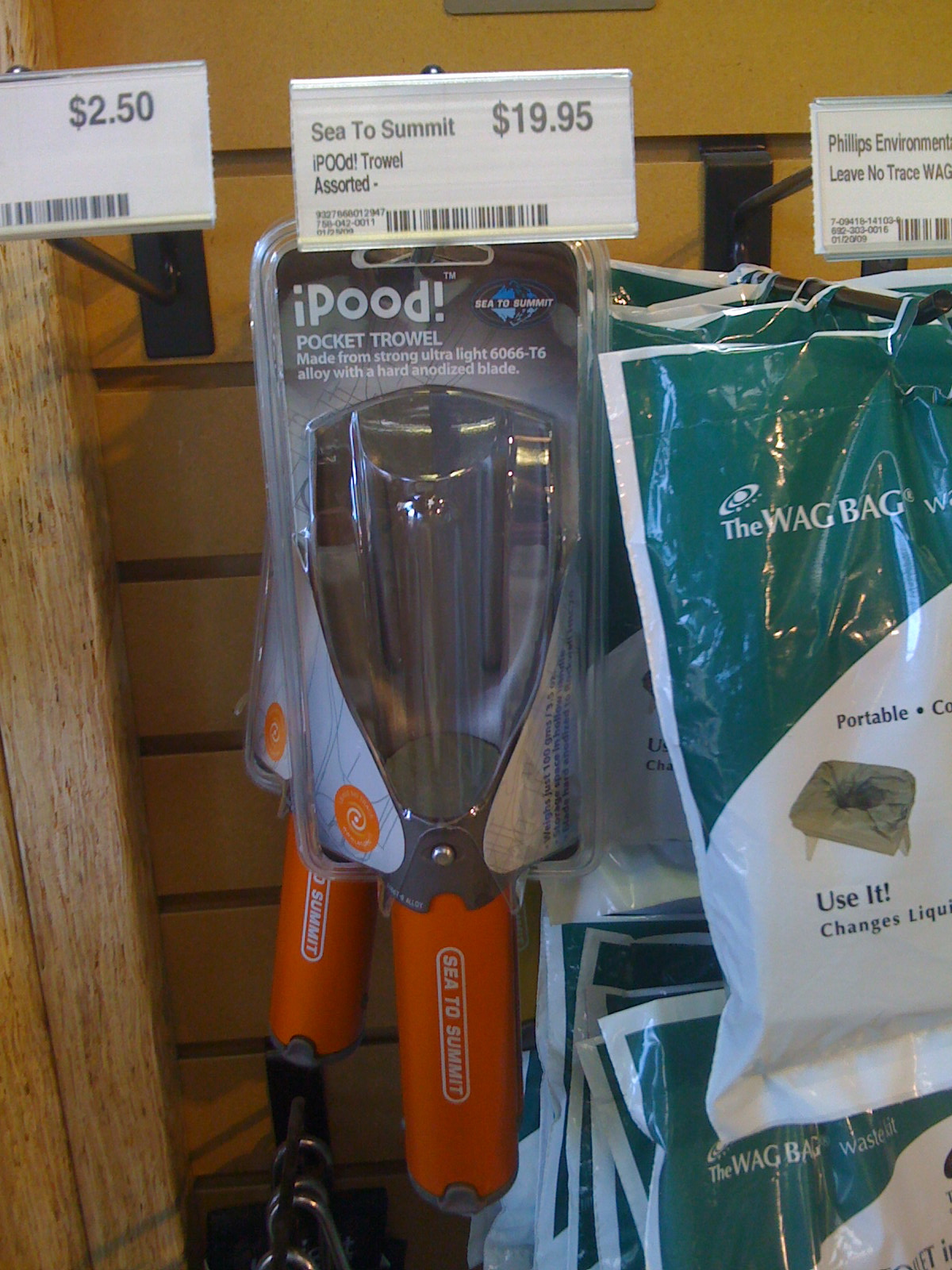
I saw this new “iPOOd” trowel at a Virginia REI store. Like an actual iPod, it is lightweight and has very few buttons. Unlike an iPod, it is good for digging.

ipood

Online Price Trends from Gazaro

The free site Gazaro allows you to look up products and see pricing trends. You can see if the product’s price has dropped regularly or if you are at a high blip. Gazaro also identifies products that have recently dropped significantly in price.  Sign up is required, but there is no fee.

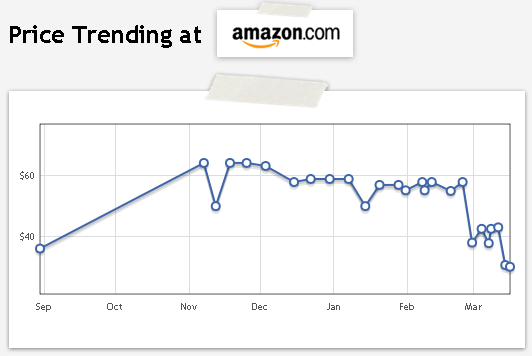
This is an example trend chart showing that Microsoft Wireless Notebook Presenter Mouse 8000 recently dropped in price at Amazon.

Scroll to Top