

Online Charity Resources
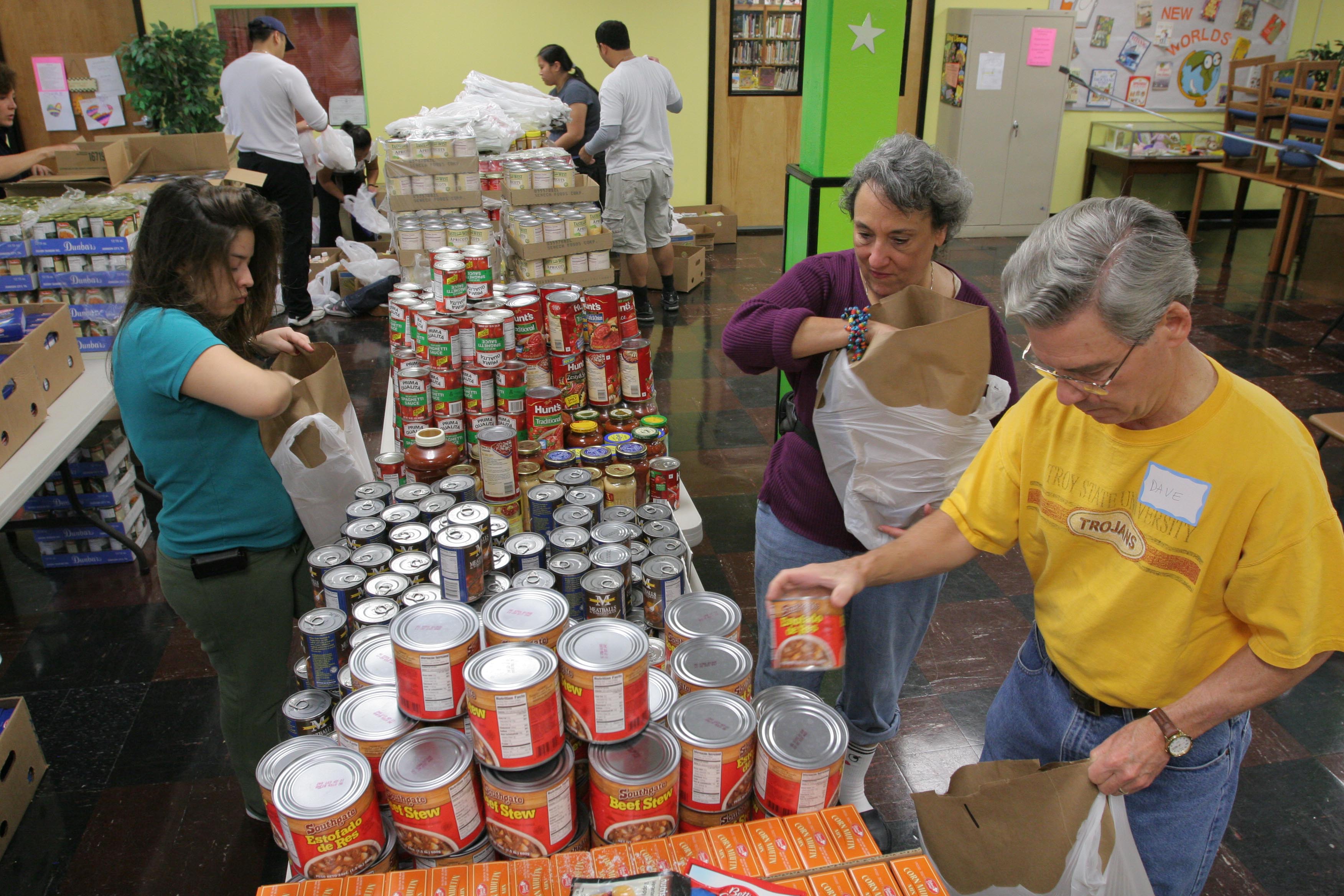 Over the holidays, it’s good to consider the less fortunate. Now it’s easier than ever to make donations or find a volunteer opportunity from your computer.
NPR has a story called:
How To Use Technology To Donate To Charities
It covers how charities are using technology, from the Salvation Army accepting donations by text messages to giving charity gift cards that allow the recipient to choose their favorite charity.
Although there’s the impression that it can be less personal to give online, Gallaga says he found the opposite to be true when he gave money to DonorsChoose.org, a company that connects students and teachers to people who would like to donate. Gallaga says he got an e-mail from a teacher thanking him and telling him that the money was being used to buy AV equipment at a low-income school in Wisconsin.
“It made me feel more connected to that charity, and it made me feel like I had helped some people,” he says.
The Washington Post covers D.C. area charity issues in their article:
A Season For Giving
Washington area nonprofits, which provide a safety net for those suffering the most, are reeling from the recession. A recent survey found that four in 10 area nonprofits expect to close down programs or reduce staff in 2009. Four in five philanthropic entities reported a drop in assets from 2007 to 2008. (Regional nonprofits may also have lost as much as $1 billion to Bernard L. Madoff’s alleged fraud.) Meanwhile, 44 percent of area nonprofits anticipate an increase in demand for their services in the coming year. In other words, demand for charitable services is greater than ever, while resources are increasingly hard to come by.
Individuals who are interested in giving, but who are not sure where to start, should look through “The Catalogue for Philanthropy: A Guide to Giving, Greater Washington.” The catalogue highlights some of the smaller but more effective nonprofits in the region. Donors who want to help charities that provide essential services, including food and shelter, should consider giving to the Community Foundation’s Neighbors in Need Fund, established in response to the economic crisis. Those who want to volunteer can find ample opportunities through Greater D.C. Cares organization.
 .
.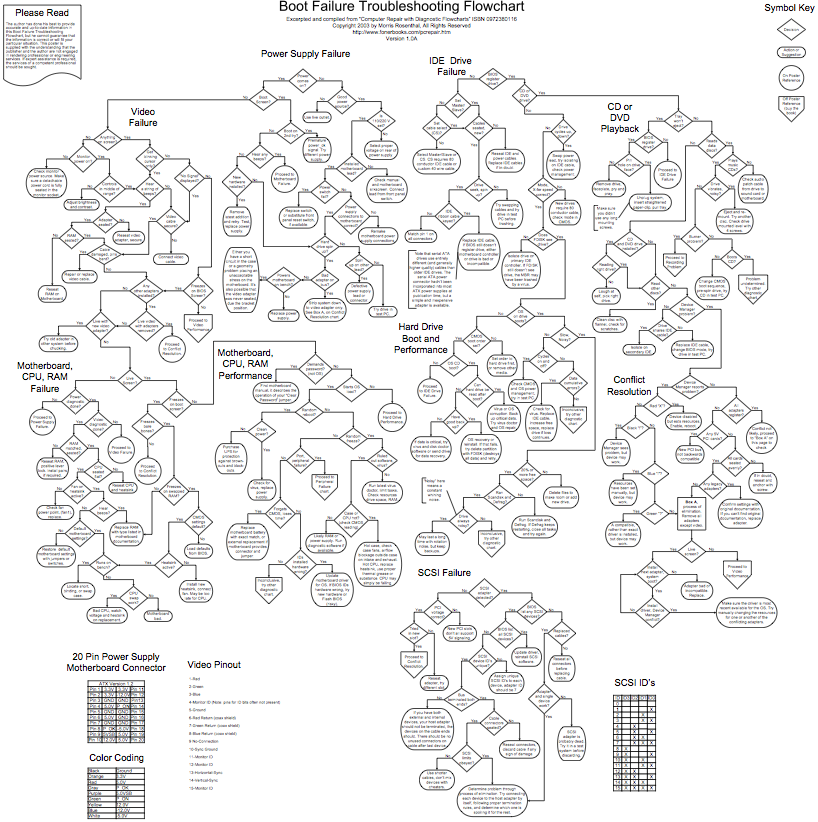 The most comprehensive of these flowcharts is the Boot Failure Troubleshooting Flowchart which encompasses several smaller flowcharts. You can see that it is PC focused, asking you to run scandisk and FDISK on your hard drive. Still, the principles apply to any computer.
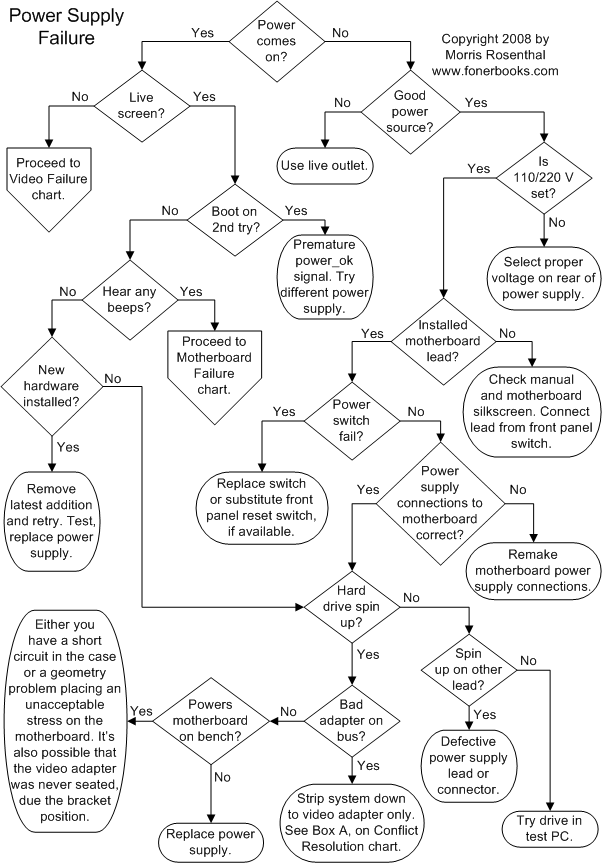 Power Supplies commonly break, especially if they are hit by a power surge (too much power, such as when hit by lightning), blackout (no power), or brownout (lower voltage power).
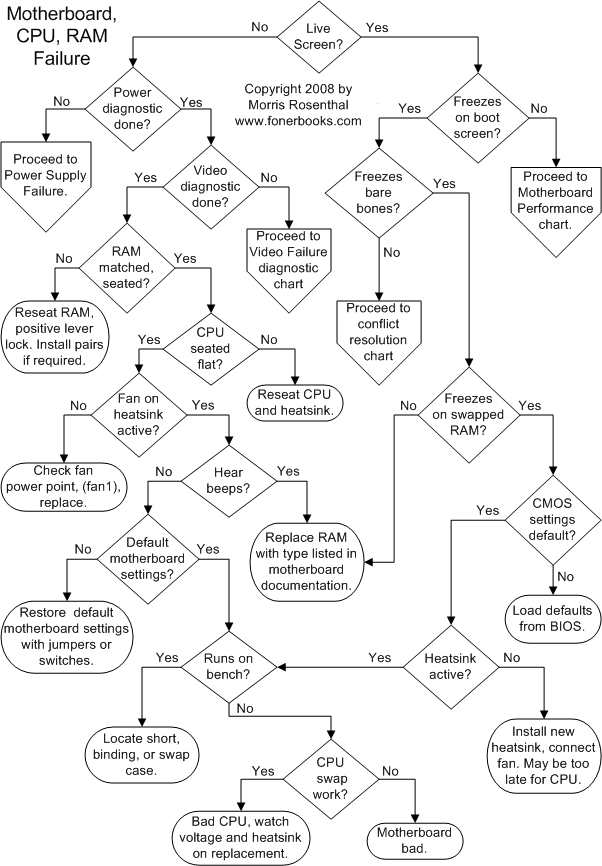 RAM problems can be vexing because they might only appear when a particular part of the RAM is accessed. This can manifest itself through strange computer behaviors that are often mistaken for viruses.
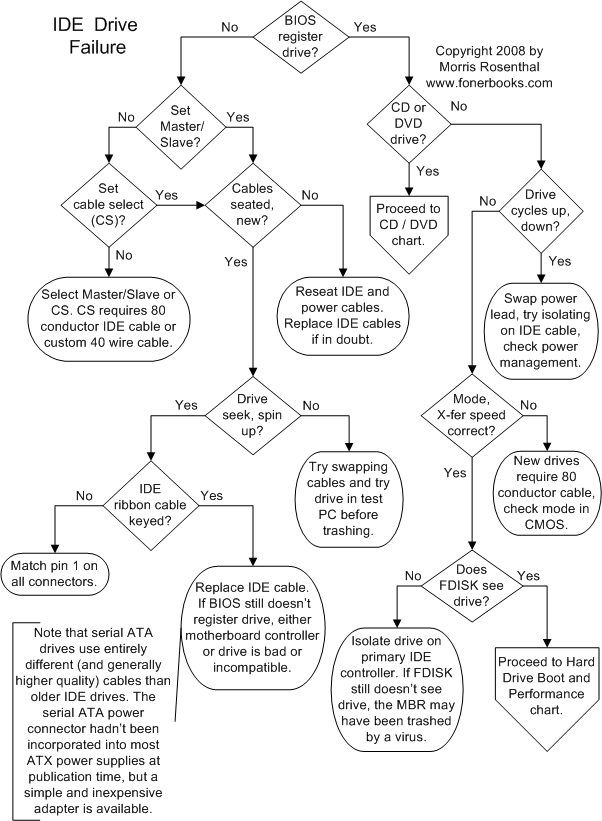 With spinning disks and moving heads, hard drives will eventually fail. Many of today’s laptop hard drives have accelerometers built-in so that they can protect the hard drive when you are moving the laptop. But the moving parts will eventually break. Studies show annual hard drive failure rates to be 2-13%, depending on usage and particular model used. Over the next 5 years there is expected to be a transition to primarily using solid state drives (SSDs) that can potentially last longer and use less energy.
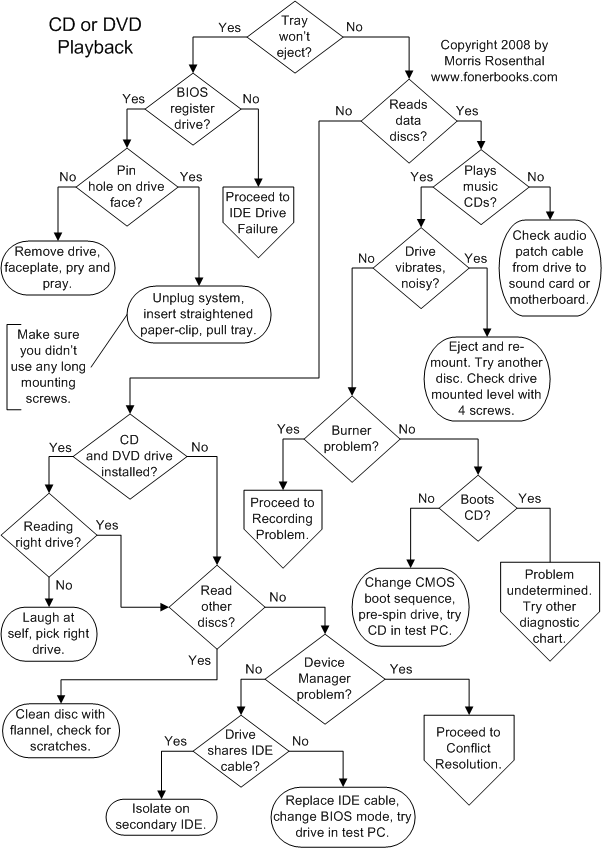 Again, this chart assumes that you are using an IDE connector, not today’s standard of SATA drives.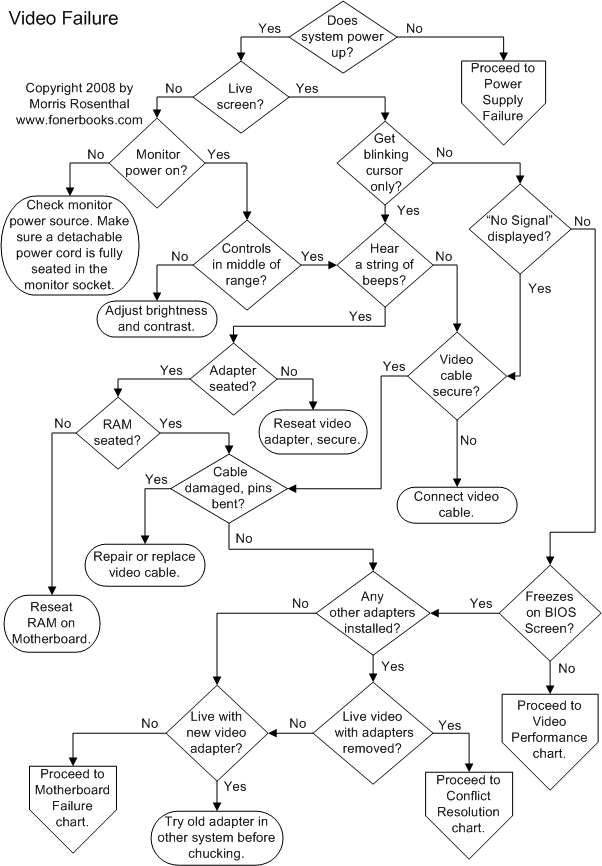
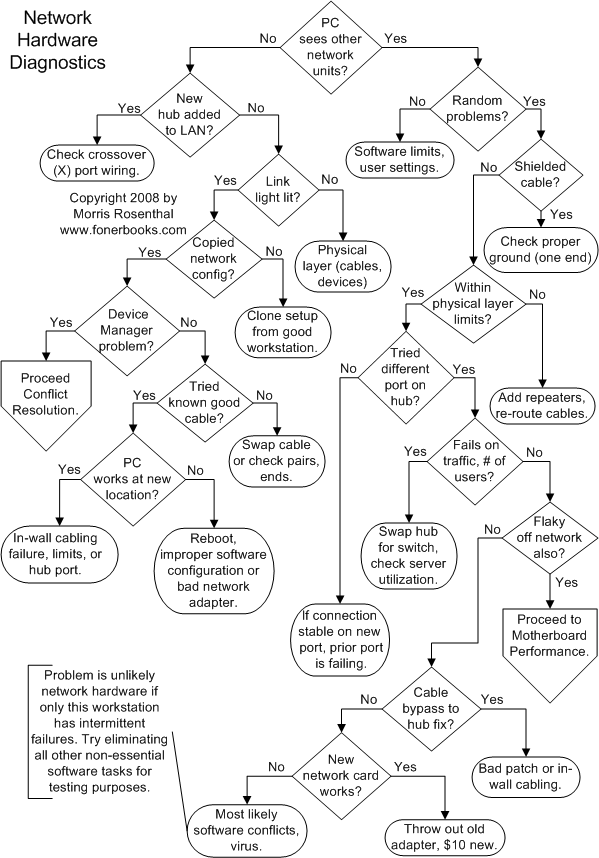 This is another case where it is useful to have other computers available to determine if the problem is related to the network (cables, router, switch) or the computer.
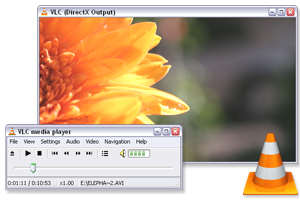 VLC Media Player