TV

The Quiet Revolution in Media Downloading: Faster, Safer, and Simpler

The days of downloading media through traditional peer-to-peer (P2P) file sharing are fading. Today, the “state of the art” for accessing and downloading content has moved to a faster, more secure method that happens almost entirely in the cloud.
This new ecosystem prioritizes speed and security over complexity:

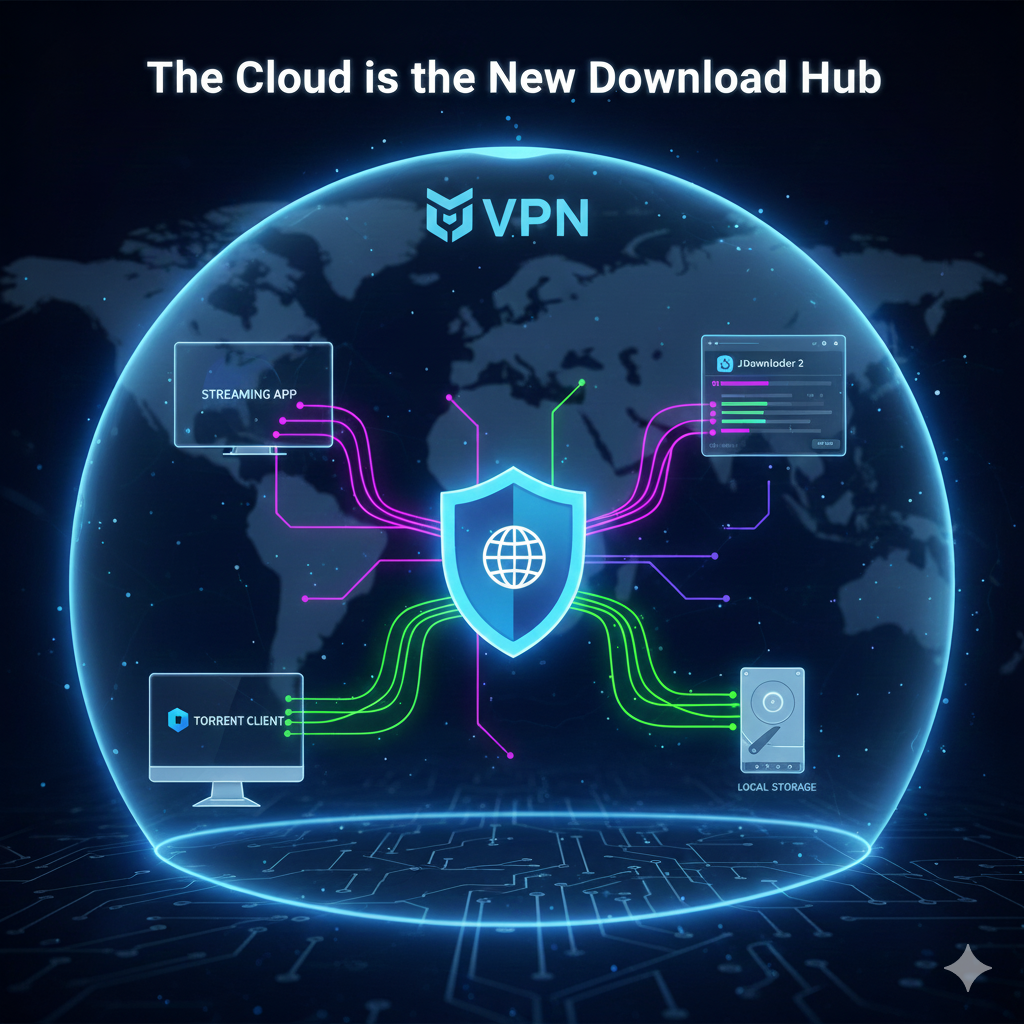
The Cloud is the New Download Hub

The most significant change is the rise of Debrid Services (like Real-Debrid). Instead of exposing their home IP address while downloading, users offload the risk and bandwidth strain to remote cloud servers. These services instantly access massive libraries of content, converting risky files into secure, high-speed HTTP downloads.

The Key Tools Powering the Shift

Whether you want to stream or permanently download a file, the process relies on linking several specialized tools:

  • Stremio: Serves as the modern, user-friendly interface for browsing content that links directly to the Debrid server.
  • qBittorrent: Still used by some as a source or search engine for finding the original files, which are then quickly routed to the Debrid cloud.
  • JDownloader 2: The preferred tool for downloading files from the Debrid server back to a local computer. It maximizes download speed by using multiple connections.
  • VPN (NordVPN, etc.): Remains a core security measure, protecting user privacy during the initial search phase and enhancing security while using Debrid services.

This combination of tools defines the current state of media consumption: a system designed for maximum convenience, high-speed delivery, and a minimal footprint on the user’s home network.

Testing HDMI Cables

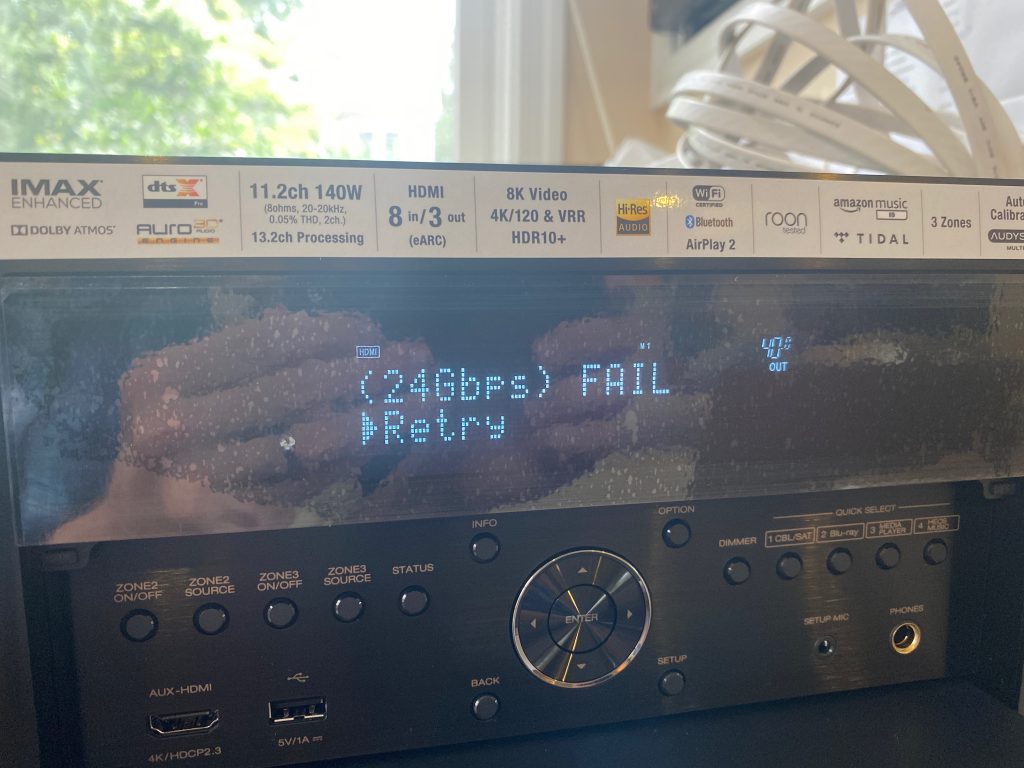
I recently helped set up a new house with cables including long HDMI cables that would not be easily replaceable after drywall went up. We wanted the latest HDMI 2.1 cables, which are capable of at least 40Gbps bandwidth. To do this for long cable runs, we needed expensive optical cables. Since these cables needed to work, we had to test them. To do so, we purchased a receiver that we planned to buy later anyway, the Denon AVR-X6700H.

Denon AVR-x6700h HDMI Cable Diagnostic

If you press the back button (below and left of the circle) and up cursor button (part of the circle) on this receiver, an “installer” secret menu item appears, a diagnostics mode. This can test cables and show the throughput achieved by the cable.

We’re glad that we ran those tests. Two of the cables we purchased failed the full HDMI 2.1 spec by not achieving 40Gbps:

There are a couple of tells for which cables fail in this list. First, the failing cables are 50-60% the cost of the passing cables. Second, the failing cables have the word “con” in their name.

We were able to switch out the failing cables before the drywall arrived. If you’re looking to test cables and you need a receiver, the new Denon lineup does an impressive job.

Buying A TV

TV Advice

Buying a TV can be quite intimidating. When clients ask me what to get, here’s what I usually recommend.

Go to a big box store (Costco, Sams) since they have an excellent return policy, good prices, and they don’t try to give you terrible upsells and warranties. If you want the best value, look at Vizios. If you want the best TV and picture look at Samsungs. They cost more, but are the best displays for most people’s needs.

Projectors

If you want a big TV and you have good light control in the room, meaning that you can make it dark, consider getting a front projector. You can get an excellent projector that will give you a 100+ inch screen for $1400. This takes a little more work since you need to position the projector, get a screen, and focus the projector. But it’s the only cost effective way to get a screen over 75 inches.

Plasmas

The Vizios and Samsungs mentioned above are LCDs. If you are big into sports and you appreciate the more active (slightly less ghosty) look, consider getting a plasma TV over LCD. Modern LCDs are great and have largely done away with the ghosting problems. Most people never notice any image issues. But many video professionals still prefer the look of plasmas. Plasma images are dimmer so they aren’t as good in well lit areas as LCDs.  They are thicker and heavier than LCDs.

Panasonic makes the best plasmas. A couple of years ago Pioneer’s Kurio was the best, but Pioneer stopped making it and sold the technology to Panasonic.

Don’t Fall for the Upsell

Remember that TVs are warrantied by the manufacturer so you don’t need to buy an extended warranty. And you can get great HDMI and other cables at reasonable prices from monoprice.com.

Why People Torrent

Cartoon from The Oatmeal depicting why people torrent content illegally.

It’s clear why people torrent. But it took me a while to figure out why HBO does not offer HBO GO, their internet video streaming service, as a stand-alone option outside of cable, even for a high fee like $40/month. HBO’s co-president Eric Kessler said that they would never offer HBO GO for sale to non-cable subscribers.

The reason is that HBO is owned by Time Warner Cable. They want to keep the existing cable TV model going. Time Warner doesn’t want to become a “dumb pipe” for TV programming streamed from others.

An independent HBO would clearly find that it makes business sense to offer HBO GO for sale and bypass the cable/satellite providers. So Time Warner created a content/distribution cabal that unfortunately limits the options to consumers. Comcast purchased NBC for the same reason.

See Freepress’s ownership charts showing all the vertically integrated media organizations.

3D Video and Nausia

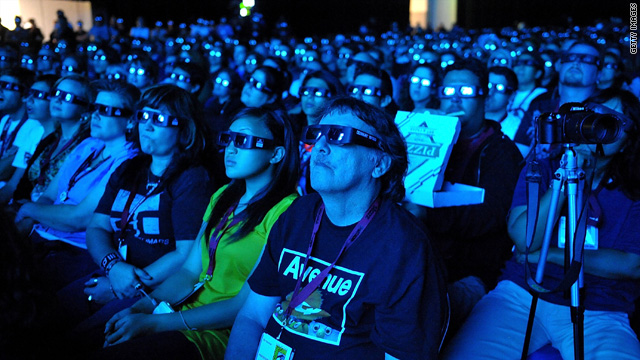
The Consumer Electronics Shows (CES) just wrapped up in Las Vegas and one of the main themes was 3D video coming to home televisions. Along with this, the big movie Avatar is being shown in many locations in 3D.

3D audience

While 3D adoption will grow, there are some problems such as having to wear silly glasses and the “depth of field”.

Depth of Field Problem

About 20% of the people I know who saw Avatar in 3D said that they felt nauseous or got a headache. This is primary due to a “depth of field” problem.

When you look at a close up object in the real world, you focus on it and things in the background are out of focus. You then look at something far away and then can focus on that clearly.

In 2D movies, the camera focuses on what is important and other items are out of focus, especially when there is a wide depth of field.

In 3D movies, our eyes expect to be able to look at an out-of-focus area and have it come into focus, just like in real life. But if it was shot out of focus, this is impossible. Further, the shallower the depth of field (meaning the more that the foreground and background are both in focus) the more cartoonish a video can look. This is a reason that cartoons, because they have no depth of field, work great with 3D.

An article at Shadow Locked explains How to avoid getting a 3D headache while watching Avatar. You have to look at what is in focus. See picture:

Avatar Background Blur

3D Does Work in Many Cases

For cartoons and sports, we do not expect to see a depth of field. And typically James Cameron shot Avatar with little depth of field. But, to the extent that depth of field is an important tool for movies, it will limit adoption of 3D movies for many people.

Scroll to Top