App

iOS 26 Call Features: Say Goodbye to Spam Calls and Hold Music

If you’re tired of spam calls interrupting your day and endless hold music draining your patience, iOS 26 has arrived with two game-changing features that transform how you handle phone calls. Apple’s latest update includes Call Screening and Hold Assist—tools designed to give you back control over your phone.

Call Screening: Your Personal Gatekeeper Against Scammers

Call Screening is iOS 26’s answer to the relentless wave of telemarketing and scam calls that plague smartphone users. Instead of your phone ringing every time an unknown number dials in, this feature creates a protective barrier between you and potential nuisances.

How It Works

When someone who’s not in your contacts calls, a Siri-style voice automatically answers and asks them to provide their name and reason for calling. The information is transcribed to text and shown to you, allowing you to decide whether to accept, decline, or ask for more information. The beauty of this system? You never have to engage directly with the caller unless you choose to.

For telemarketers and scammers, this creates an immediate obstacle. Robocalls and spam operations typically can’t interact with the screening prompts effectively, making this feature particularly powerful at filtering out unwanted calls.

Setting It Up

Call Screening isn’t enabled by default—you need to turn it on yourself. Here’s how:

  1. Update your iPhone to iOS 26 (available for iPhone 11 and newer models)
  2. Open Settings, then go to Apps
  3. Tap Phone
  4. Scroll to “Screen Unknown Callers”

You’ll see three options: “Never” (call screening off), “Ask Reason for Calling” (screening enabled), or “Silence” (unknown calls go straight to voicemail with transcription).

Screen Unknown Callers

Real-World Impact

The results can be dramatic. After leaving this on for a few days, my number of spam calls has dropped dramatically. The feature has been described as bringing “pure bliss” to iPhone users weary of constant interruptions.

Hold Assist: Never Wait on Hold Again

While Call Screening protects you from unwanted incoming calls, Hold Assist tackles the other phone frustration we all face: being stuck on hold with customer service.

How It Works

Hold Assist automatically kicks in when you’re placed on hold during a call. Your iPhone detects the hold music and offers to wait for you. If you accept, your phone monitors the line in the background while you go about your day. When a real human picks up, you receive a notification alerting you to return to the call.

Unlike Call Screening, Hold Assist requires no setup—it works automatically from the moment you install iOS 26, and it’s available on all devices that support the update, not just Apple Intelligence-enabled phones.

The Convenience Factor

This feature is especially valuable when dealing with airlines, insurance companies, or tech support lines where wait times can stretch into hours. Instead of sitting by your phone listening to elevator music, you can respond to emails, make dinner, or do literally anything else productive.

Privacy First

Both features process information on-device, meaning your privacy isn’t compromised by sending data to cloud services. Everything happens securely on your iPhone.

The Bottom Line

iOS 26’s calling features represent Apple’s most significant phone improvements in years. Call Screening helps you avoid distractions, protect your privacy, and filter out robocalls and scams before they ever reach you. Meanwhile, Hold Assist saves you countless hours of listening to repetitive hold music.

If you haven’t updated to iOS 26 yet and you’re constantly battling spam calls or lengthy customer service wait times, these features alone make the upgrade worthwhile. In an era where our phones do everything from AI assistance to mobile payments, it’s refreshing to see Apple innovating on the most fundamental function: actually making and receiving phone calls.
AI Goes Local: Run Powerful Models Right on Your Computer

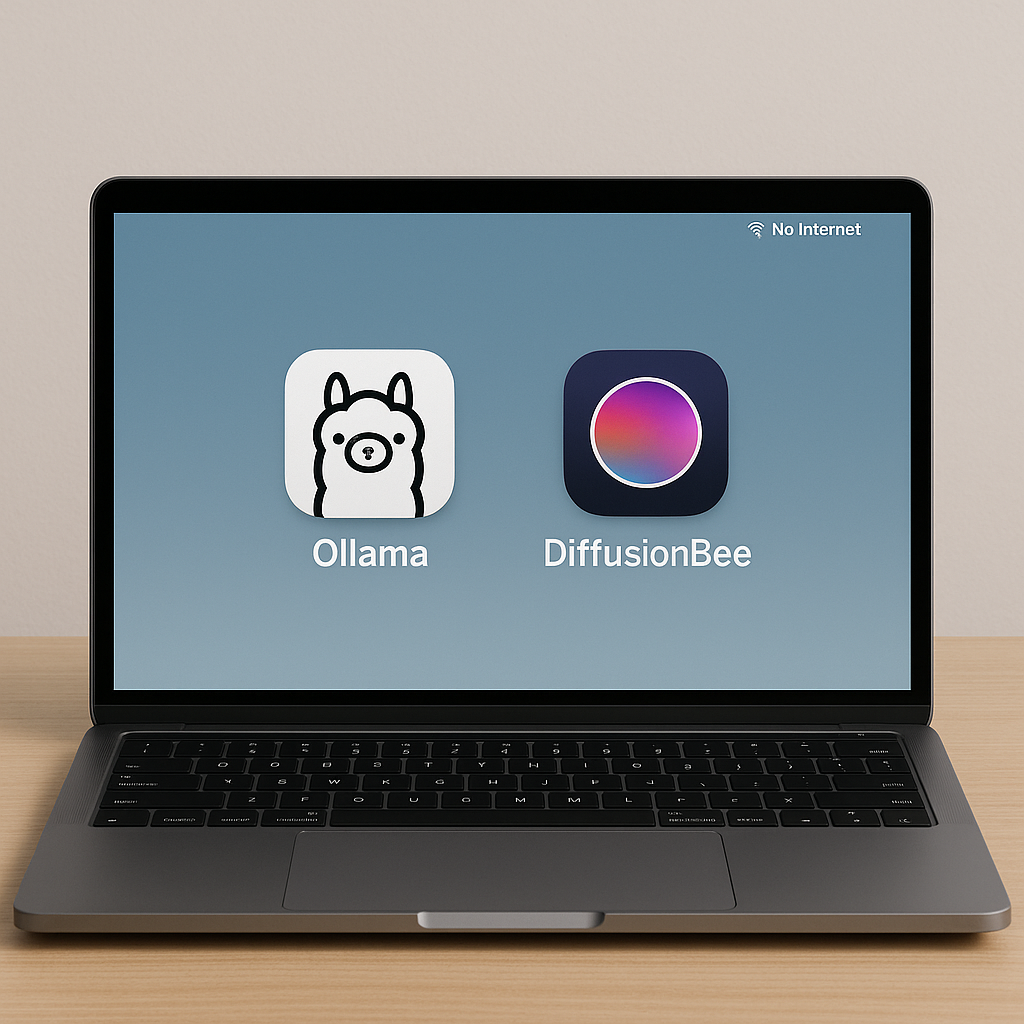
Ollama and DiffusionBee

The AI revolution just got more personal. While most of us have grown accustomed to typing prompts into ChatGPT or Claude through our browsers, a new wave of tools is bringing that same AI power directly to your desktop—no internet required, no monthly subscriptions, and complete privacy.

Two standout applications are making local AI accessible to regular users: Ollama for text generation and DiffusionBee for creating images. Both represent a significant shift toward democratizing AI technology.

Ollama: Your Personal ChatGPT

Ollama recently launched a partnership with OpenAI and released a new GUI application for macOS and Windows, transforming what was once a command-line tool into something anyone can use. The app lets you download and chat with various AI models, including OpenAI’s new open-source gpt-oss models available in 20B and 120B parameter sizes.

This is significantly more user friendly than it used to be. The new interface supports file drag-and-drop, letting you upload PDFs or documents and have conversations about their contents. It even includes built-in web search capabilities, though you’ll need to enable that feature.

The performance trade-off is real but workable. The smaller 20B model can run on systems with just 16GB of memory, though more RAM certainly helps. On my M4 Mac with 32GB, responses often have a delay of a minute or so, but then come faster than I can read them. This is noticeably slower than the cloud-based services we’re used to. The key difference is that everything happens on your machine, with complete privacy.

DiffusionBee: AI Art Without the Cloud

For image generation, DiffusionBee brings Stable Diffusion to your desktop with remarkable ease. This completely free application runs locally on your computer with a one-click installer and no technical knowledge required.

The app includes text-to-image generation, image-to-image transformation, inpainting, and upscaling features—essentially everything you’d find in premium online services. Your prompts, models, and generated images never leave your device, addressing privacy concerns that many professionals in the DC area have about cloud-based AI tools.

The quality won’t match the latest offerings from Midjourney or DALL-E, but for many use cases—creating presentation graphics, brainstorming visual concepts, or just experimenting with AI art—it’s more than sufficient.

Why This Matters Now

This shift toward local AI addresses several concerns that have limited adoption in professional settings. Government contractors, lawyers, and consultants who handle sensitive information can now experiment with AI without worrying about data leaving their systems. Small businesses can access powerful AI capabilities without ongoing subscription costs.

The models available today are roughly equivalent to GPT-3.5 or early GPT-4 performance levels—a step behind the cutting edge, but still remarkably capable for most tasks. And unlike cloud services, there are no usage limits, rate limits, or monthly bills.

Both applications install in minutes and start working immediately. Ollama downloads models as needed (expect several gigabytes per model), while DiffusionBee includes everything required to start generating images.

The local AI movement represents more than just an alternative to cloud services—it’s about putting powerful technology directly into users’ hands. For the DC community, where data privacy and independence matter, these tools offer a compelling glimpse of AI’s more distributed future.

Download Ollama at ollama.com and DiffusionBee at diffusionbee.com. Both are free and work best on modern computers with at least 16GB of RAM.

Ordering New iPhones

For the crazy folks who order iPhones for Day 1 arrival, this most recent ordering process was a bit of a mess. Typically, you can pre-enter your order details in the Apple Store app and then submit it order time. This time, that system failed for 15-20 minutes for many folks, pushing back many people’s ordered by a couple of weeks. This might have been compounded by supply constraints.

So if you’re ordering at that crunch time at 8am when sales start every year, you should try to order thought the Apple Store app, but also through the Apple website. If you have an iPad, try that too at the same time.

For people who were delayed in ordering or forgot this year, you can try to get the iPhones in the Apple store. This is a site that will show you what nearby stores have availability:

https://iphonechecker.herokuapp.com/q/22201/i15ProMax/unlocked

And of course, for all the normal people, you can just wait untill November, when iPhones should just be available.

Virginians, Install the COVIDWISE App

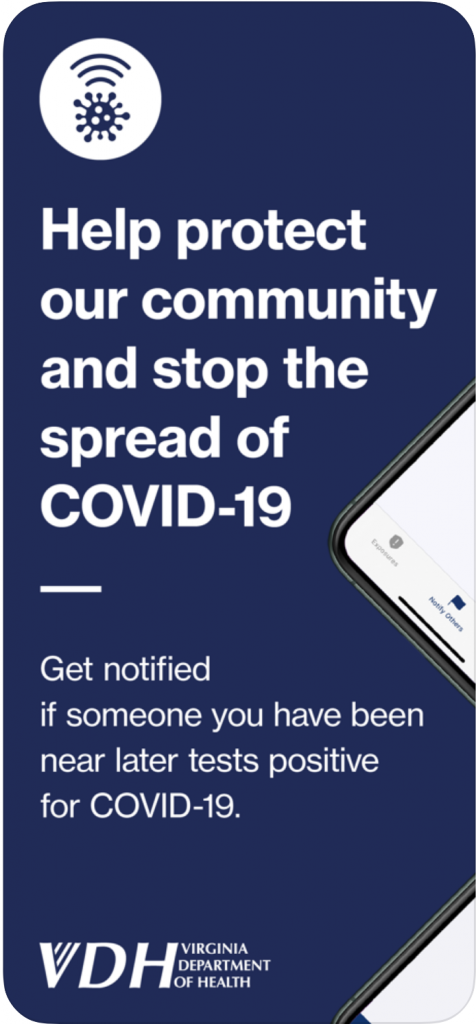
Built with privacy potection in mind, and using technology developed by Apple and Google, the COVIDWISE app will alert you if you have encountered someone who later reported testing positive for Coronavirus. If lots of people use this or other interoperable apps from other states, it will enable easy contract tracing and allow people to more quickly quarantine, thus slowing the spread.

From the Washington Post:

The app will work outside of Virginia, but only users verified by the Virginia health department will be able to input a Covid-positive status. Per the Virginia Department of Health website, “There have been discussions regarding a federal database for positive diagnosis verification which would greatly simplify interoperability of exposure notification apps between states. It is not currently certain when this will be available.”

UPDATE: If you do every get a positive COVID test result, be sure to ask for the 6 digit pin so that you can enter your positive result into the COVIDWISE app. You need that to alert others of your result. Sadly, this isn’t given to you by default. That fact, and the lack of universal usage of the app, have limited its usefulness thus far.

Baby Tracker App

screen568x568
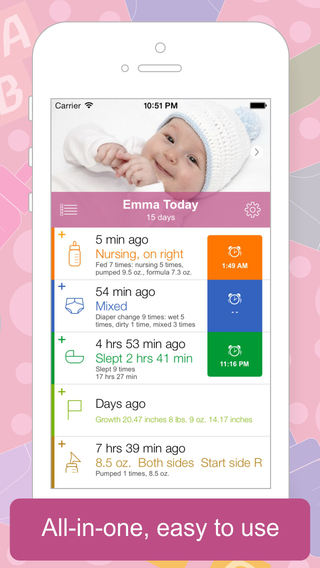
Have a new baby and need to track feedings, diapers, sleeping, and growth statistics? I initially thought the tried-and-true pen and paper approach would be easiest. But after reviewing most of the baby tracker apps, I found an app that is simple and easier than anything else. Most baby apps are bloated with features and ugly. Baby Tracker by nighp is an iPhone and iPad app that looks like it was designed by Apple.

One of my favorite features is the ability to use it with others. I set Baby Tracker to store its data in dropbox so my wife and I can both enter and review information. So if I do a late night bottle feeding, she can wake up and see when the feeding started and ended.

It’s the perfect app for the nervous new parent.

Scroll to Top